

CRM Beta
CRM: Keep every relationship moving, from first hello to paid invoice.
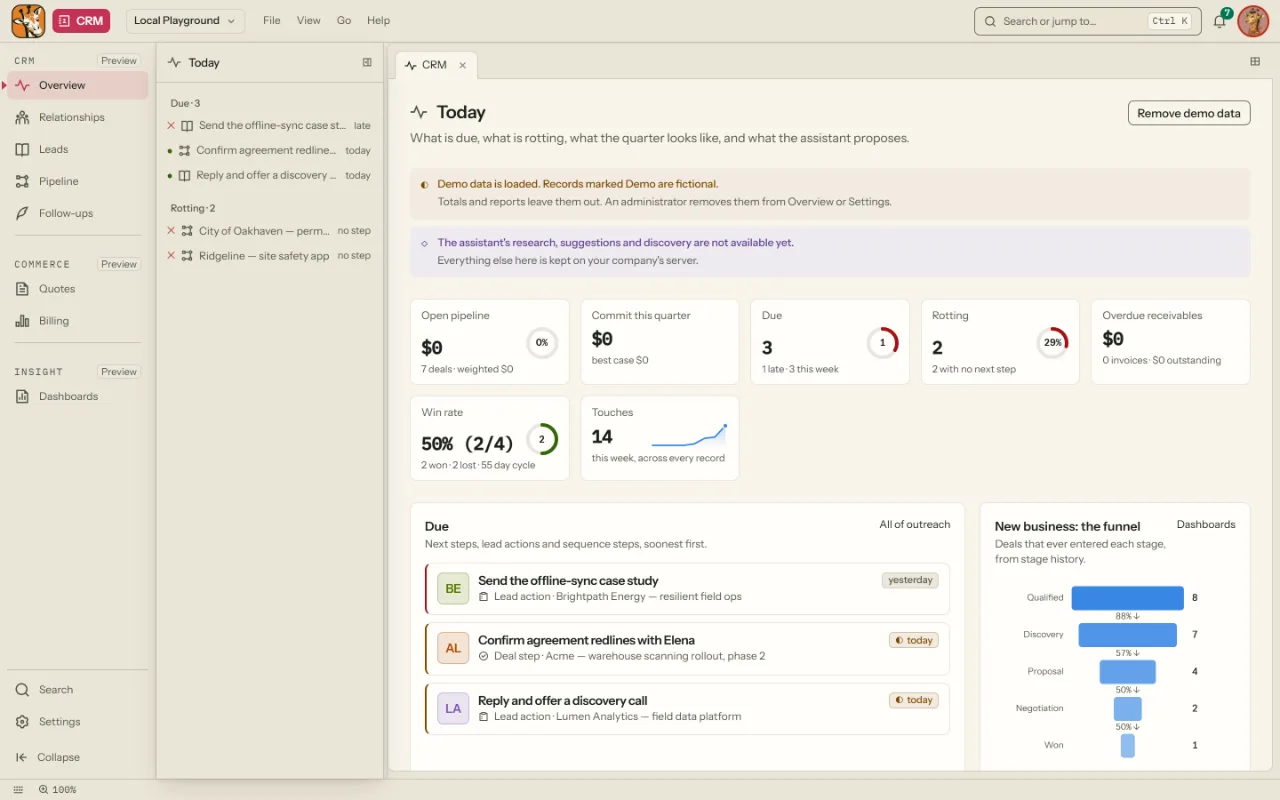
CRM keeps the people and organizations behind your bids, the deals and quotes in play, and the invoices after a win. It sends nothing itself: follow-ups are logged for a person to send.


01Where it sits
Where CRM carries the bid.






CRM
Capture
Notices arrive from SAM.gov on each saved search's schedule, or you add them by hand, and they wait in one review queue. Approving one files the opportunity and its project together, so nothing is half-filed.
Scout, Trace
Propose
Quill, Cipher, Vega, Tempo
Deliver
Atlas, Tempo
CRM
Close
A finished project is archived, read-only and out of the active lists. What the team learned goes into the Library, where the next bid can cite it.
Echo, Trace
02What is inside
What CRM holds.
- Relationships: people and organizations
- Leads by hand, from a website form, by webhook, or from a pipeline
- Pipelines and deals with stage gates
- Quotes with revisions and the customer's own link to accept or decline
- Invoices, and payments through your own connected Stripe account
- Follow-up sequences, logged for a person to send
Leads in one list
Leads added by hand, from a website form, by webhook or from a pipeline, with the source kept.
Follow-up a person sends
Follow-up sequences on the schedule you set, logged for a person to send. Nothing goes out by itself.
Quotes the customer answers
Quotes keep their revisions, and the customer accepts or declines from their own link. A person sends it.
03The crew in CRM
Who works here.
Example crew members, set up the way a proposal team might. Each reports to a person and can do only what it was given.
See CRM for yourself.
Ask Jeeraph to show you CRM, and it brings up the real screens and says what each part is. Or book thirty minutes with the people who build it.